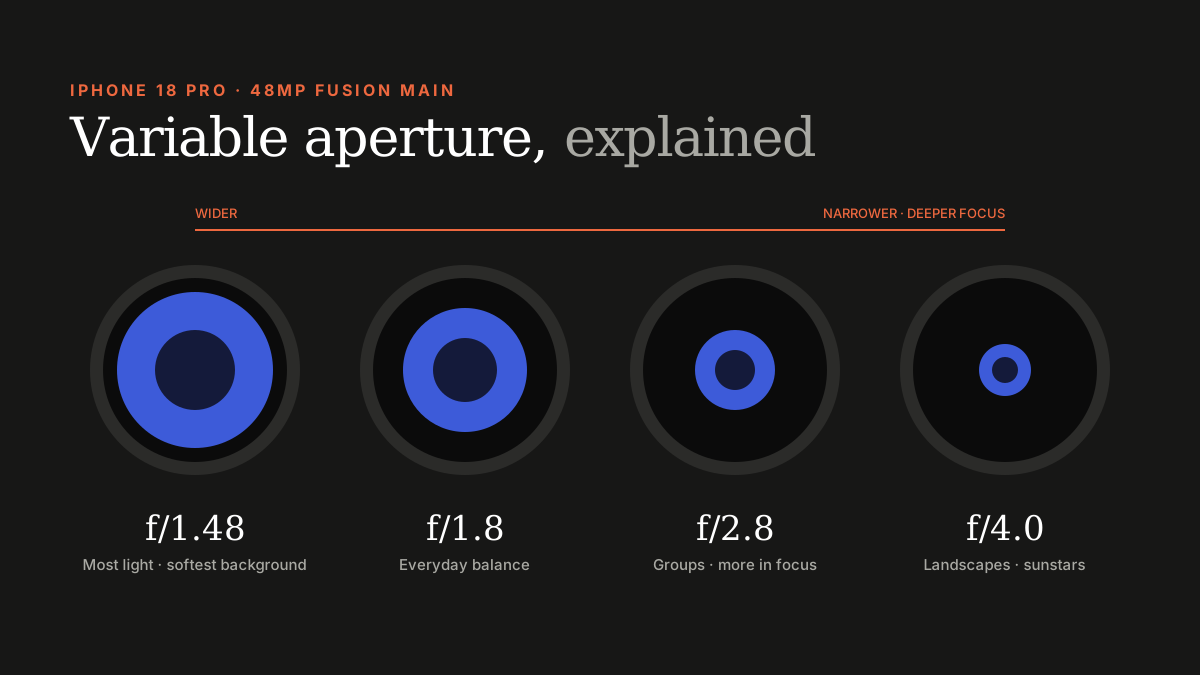
The main camera can physically open and close its aperture. Wider (f/1.48) gives more light and background blur; narrower (f/4.0) keeps more of the scene sharp.
Every iPhone until now has had a fixed aperture on each lens, so background blur and depth of field were controlled by software. iPhone 18 Pro's main camera changes that with a real, mechanical aperture.
The four aperture settings
| Aperture | Best for |
|---|---|
| f/1.48 | Low light, food and portraits with creamy background blur |
| f/1.8 | Everyday shooting with a natural balance |
| f/2.8 | Groups of people, so faces at different distances stay sharp |
| f/4.0 | Landscapes, architecture, and sunstar effects on lights |
Do you have to set it yourself?
No. In the default Camera app, the aperture adjusts automatically for depth of field and lighting. If you want control, the new Pro controls let you choose aperture, shutter speed and white balance, with a live histogram.
For video creators: Final Cut Camera 2.4
- Direct aperture control, plus shutter-priority and aperture-priority modes.
- False colour, clipping indicators, improved focus peaking, RGB Parade and a histogram.
- Clean SDI output and genlock offset for multi-camera productions.
Pro vs Pro Max: same camera
Unlike some past years, there's no camera advantage for the bigger phone. iPhone 18 Pro and Pro Max share the same camera system.
A launch bug to know about
A small number of phones showed a colour artifact in 2x photos taken at f/1.48 in certain lighting. Apple fixed it in iOS 27.0.1, so update before judging your camera.
Sources
- Apple Newsroom: iPhone 18 Pro announcement
- Apple Newsroom: Final Cut Camera variable aperture
- Engadget: iPhone 18 Pro vs iPhone 17 Pro
Find Next Phone is an independent retailer. Apple, iPhone and iOS are trademarks of Apple Inc. Illustrations are our own and are not Apple product images.